
Whether you’re dealing with persistent foot pain, recurring sports injuries or discomfort when walking, the way you move could be contributing to the problem. Even small changes in your walking or running pattern can place extra strain on your feet, ankles, knees and hips, leading to pain that doesn’t seem to go away. A professional gait analysis helps identify these movement patterns, allowing a podiatrist to pinpoint the underlying cause and recommend the most effective treatment.
At Paul Miller Podiatry, we use gait analysis to assess how your body moves and uncover biomechanical issues that may be affecting your daily life. Whether you’re an experienced runner looking to improve performance, someone recovering from an injury or simply struggling with ongoing foot pain, our expert assessments can provide valuable insight into your condition. If you’re experiencing discomfort or would like to learn more about how gait analysis could help, get in touch with Paul Miller Podiatry to arrange an appointment.
In this complete guide, we’ll explain what gait analysis is, how it works, who can benefit from it and the wide range of conditions it can help diagnose and treat.

What Is Gait Analysis?
Gait analysis is a detailed assessment of the way you walk or run. While it might seem like a simple everyday movement, walking actually involves a complex combination of muscles, joints and bones working together. If just one part of your body isn’t moving as it should, it can place extra stress on other areas, often leading to pain, discomfort or recurring injuries.
A gait analysis allows a podiatrist to closely examine your movement patterns and identify any biomechanical issues that may be contributing to your symptoms. By understanding how your body moves, rather than simply treating the pain itself, it’s often possible to find the underlying cause and create a treatment plan that offers longer-lasting relief.
If you are looking to get a Gait Analysis get in touch with Paul Miller Podiatry today.
Why is your gait important?
Your gait affects far more than just your feet. An abnormal walking or running pattern can place additional strain on multiple areas of the body, including:
- Feet – Heel pain, plantar fasciitis, bunions and arch pain.
- Ankles – Instability, stiffness and repeated sprains.
- Knees – Poor alignment can increase pressure on the knee joint.
- Hips – Uneven movement may cause discomfort or muscle imbalance.
- Lower back – Changes in posture and weight distribution can contribute to ongoing back pain.
Did you know? Even a slight imbalance in the way you walk can affect your entire body over time. Many people are unaware of these movement patterns until they begin experiencing persistent pain.
What does a gait analysis assess?
During your assessment, your podiatrist will look at a range of factors that influence how you move, including:
- Your posture and overall body alignment
- The position of your feet as they make contact with the ground
- Whether you overpronate (roll your feet inwards) or underpronate (roll your feet outwards)
- Your stride length and walking rhythm
- How your ankles, knees and hips move together
- How your weight is distributed throughout each step
Looking beyond the symptoms
One of the biggest advantages of gait analysis is that it focuses on finding the cause of the problem, not just treating the symptoms.
For example:
- If you’re experiencing heel pain, the issue may actually stem from the way your foot rolls as you walk.
- If you suffer from knee pain, poor foot mechanics could be increasing pressure on the joint.
- If you’re getting recurring running injuries, an inefficient running gait may be placing unnecessary strain on your muscles and tendons.
By identifying these underlying issues, your podiatrist can recommend personalised treatments, such as footwear advice, strengthening exercises, orthotics or other therapies designed to improve the way you move.
Ultimately, gait analysis provides a clearer picture of how your body works as a whole, helping to reduce pain, improve mobility and lower the risk of future injuries.
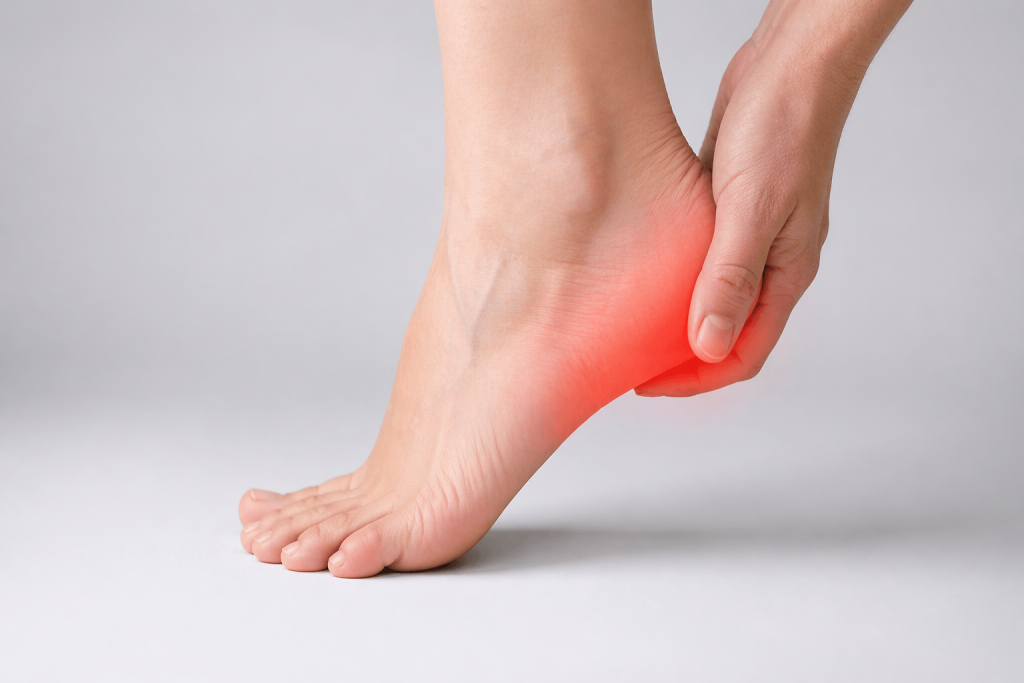
What Does Gait Analysis Look For?
Every person walks and runs slightly differently, but certain movement patterns can increase the risk of pain and injury. During a gait analysis, your podiatrist will assess how your entire body moves together, looking for subtle abnormalities that could be placing unnecessary stress on your joints and muscles.
Rather than focusing solely on where you’re experiencing pain, gait analysis aims to uncover why that pain has developed in the first place.
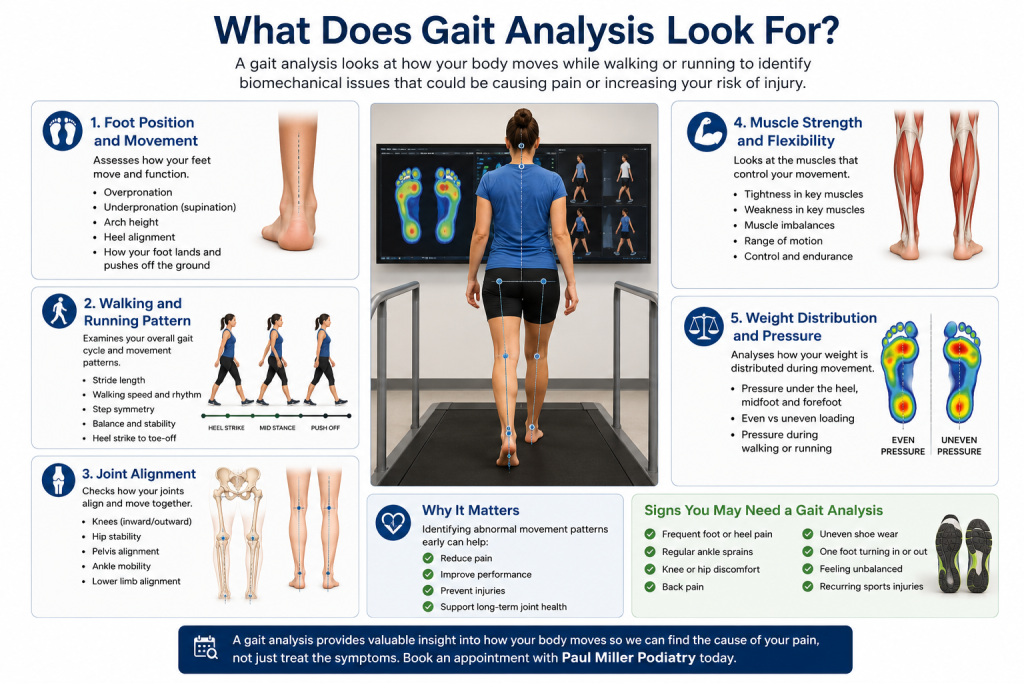
Areas Your Podiatrist Will Assess
Foot Position and Movement
Your feet are the foundation of every step you take. Small changes in the way they move can have a significant impact on the rest of your body.
Your podiatrist will assess:
- Whether your feet roll inwards too much (overpronation)
- Whether your feet roll outwards (underpronation or supination)
- Your arch height
- Heel alignment
- The way your foot lands and pushes off the ground
Walking and Running Pattern
Your gait is made up of several phases, all of which work together to create efficient movement.
During your assessment, your podiatrist may look at:
- Your stride length
- Walking speed and rhythm
- Step symmetry
- Balance and stability
- How smoothly you transition from heel strike to toe-off
Even small irregularities can contribute to ongoing discomfort over time.
Joint Alignment
The feet, ankles, knees, hips and lower back all work together. If one joint isn’t functioning correctly, another often compensates.
Your gait analysis may identify:
- Knees turning inwards or outwards
- Hip instability
- Uneven pelvis alignment
- Restricted ankle movement
- Poor lower limb alignment
These issues can often contribute to pain well away from the feet themselves.
Muscle Strength and Flexibility
Muscles play an important role in controlling how you move.
Your podiatrist may assess whether you have:
- Tight calf muscles
- Weak foot muscles
- Reduced ankle flexibility
- Muscle imbalances between the left and right side
- Limited range of movement
Identifying these issues can help guide personalised rehabilitation exercises.
Signs That May Indicate an Abnormal Gait
An abnormal gait isn’t always obvious. Many people have adapted to the way they walk without realising it.
- Some common signs include:
- Frequent foot or heel pain
- Regular ankle sprains
- Knee or hip discomfort after walking
- Shoes wearing out unevenly
- One foot turning in or out more than the other
- Feeling unbalanced while walking
- Recurring sports injuries
Read more about Gait abnormalities here.
Why These Findings Matter
The information gathered during your gait analysis helps build a complete picture of how your body moves. By identifying the root cause of your symptoms, your podiatrist can recommend the most appropriate treatment, whether that’s improving your footwear, prescribing custom orthotics, providing strengthening exercises or recommending other therapies to reduce pain and improve mobility.
Every gait analysis is tailored to the individual, ensuring your treatment plan is based on your unique movement patterns rather than a one-size-fits-all approach.

Who Can Benefit from Gait Analysis?
Gait analysis isn’t just for elite athletes or runners. It can benefit anyone experiencing pain, discomfort or mobility issues that may be linked to the way they walk or run. By identifying abnormal movement patterns, gait analysis helps uncover the root cause of many common foot and lower limb conditions, allowing for more targeted and effective treatment.
Whether you’re dealing with a recent injury or long-term discomfort, a gait assessment can provide valuable insight into how your body moves and why certain symptoms keep returning.
You may benefit from gait analysis if you have:
Persistent foot pain
If you’re regularly experiencing pain in your feet, gait analysis can help determine whether poor biomechanics or abnormal foot movement are contributing to the problem.
Plantar Fasciitis or Heel Pain
One of the most common reasons people seek gait analysis. Identifying excessive strain on the plantar fascia can help guide treatment and reduce the risk of recurring pain.
Running Injuries
Frequent shin splints, Achilles tendon pain, knee pain or recurring injuries can often be linked to inefficient running mechanics.
Knee, Hip or Lower Back Pain
Problems with your feet can affect the way the rest of your body moves. Gait analysis can identify issues that may be placing additional stress on your knees, hips or lower back.
Sports Injuries
Whether you play football, tennis, rugby or enjoy regular gym workouts, improving your movement patterns can help reduce injury risk and improve performance.
Balance or Walking Difficulties
If you feel unstable while walking, have noticed changes in your walking pattern or have suffered repeated trips or falls, gait analysis may help identify the underlying cause.
Children with Walking Concerns
Children who walk on their toes, appear flat-footed or have an unusual walking pattern may benefit from an assessment to ensure their feet and lower limbs are developing correctly.
Gait analysis can help identify issues linked to:
| Condition | How gait analysis helps |
|---|---|
| Plantar fasciitis | Assesses foot mechanics and pressure distribution |
| Heel pain | Identifies excessive strain during walking |
| Bunions | Examines foot alignment and loading patterns |
| Flat feet | Assesses arch function and pronation |
| Shin splints | Identifies abnormal lower limb mechanics |
| Achilles tendon pain | Evaluates foot movement and calf loading |
| Knee pain | Assesses alignment throughout the gait cycle |
| Hip pain | Identifies compensatory movement patterns |
| Recurrent ankle sprains | Examines stability and foot positioning |
Remember: Pain isn’t always caused by the area that hurts. For example, knee pain may actually be linked to the way your feet move when walking, while recurring heel pain could be caused by poor foot mechanics. Gait analysis helps identify these underlying causes, allowing treatment to focus on the source of the problem rather than simply managing the symptoms.
When should you book a gait analysis?
If you’ve been living with persistent pain, have suffered repeated injuries or feel that something isn’t quite right with the way you walk or run, a professional gait assessment can provide the answers you’ve been looking for.
At Paul Miller Podiatry, we carry out comprehensive gait analysis assessments to identify biomechanical issues and create personalised treatment plans that help reduce pain, improve mobility and get you back to doing the things you enjoy.
What Happens During a Gait Analysis Appointment?
If you’ve never had a gait analysis before, you may be wondering what to expect. The assessment is completely non-invasive, painless and designed to build a clear picture of how your body moves during walking or running.
At Paul Miller Podiatry, your appointment typically includes:
- A discussion about your symptoms – We’ll ask about your pain, medical history, lifestyle and any previous injuries.
- A physical examination – Your feet, ankles and lower limbs will be assessed for strength, flexibility, alignment and range of movement.
- Walking or running assessment – You’ll be asked to walk, and in some cases run, while your podiatrist observes your gait from different angles.
- Personalised recommendations – Once the assessment is complete, we’ll explain our findings and discuss the most appropriate treatment options, which may include footwear advice, exercises, orthotics or further treatment if required.
Our goal is to identify the underlying cause of your symptoms, not just treat the pain, so you can move more comfortably and reduce the risk of future problems.
Frequently Asked Questions For Gair Analysis
Is gait analysis painful?
No. Gait analysis is a completely non-invasive assessment that simply involves observing the way you walk or run. You won’t need any injections or uncomfortable procedures, making it suitable for people of all ages.
How long does a gait analysis appointment take?
Most gait analysis appointments take between 30 and 60 minutes, depending on your symptoms and whether any additional assessments are required. Your podiatrist will take the time to understand your concerns before discussing their findings and recommending the most appropriate treatment.
Do I need to bring anything to my appointment?
It’s helpful to bring the shoes you wear most often, whether that’s everyday footwear, work shoes or running trainers. This allows your podiatrist to assess how your footwear may be affecting your gait and provide tailored advice.
Can gait analysis help with sports injuries?
Yes. Gait analysis is commonly used to identify movement patterns that contribute to sports injuries, including shin splints, Achilles tendon pain, runner’s knee and plantar fasciitis. By improving your biomechanics, it can help reduce the risk of future injuries and improve performance.
Can gait analysis help with knee or back pain?
Absolutely. Problems with the way your feet move can affect the alignment of your ankles, knees, hips and lower back. Gait analysis can identify whether poor biomechanics are contributing to your pain, even if your symptoms aren’t located in your feet.
Will I need orthotics after my gait analysis?
Not necessarily. While custom orthotics may be recommended for some patients, they aren’t the right solution for everyone. Depending on your assessment, your treatment plan may include footwear advice, stretching exercises, strengthening programmes or other treatments instead.
Is gait analysis only for runners?
No. Although runners often benefit from gait analysis, it’s equally valuable for anyone experiencing foot pain, recurring injuries or discomfort while walking. Whether you’re active, spend long hours on your feet at work or simply want to improve your mobility, a gait assessment can help identify the cause of your symptoms.
How often should I have a gait analysis?
For many people, one assessment is enough to diagnose the underlying issue and develop a treatment plan. However, if your symptoms change, you’ve suffered a new injury or your activity levels increase, a follow-up assessment may be recommended to ensure your treatment remains effective.
How do I book a gait analysis?
If you’re experiencing foot, ankle, knee or lower limb pain, or you’d like to better understand how you walk or run, the team at Paul Miller Podiatry is here to help. Contact us today to arrange a professional gait analysis and take the first step towards moving more comfortably.
Conclusion – Podiatrist in Strood, Kent
Whether you’re experiencing persistent foot pain, recurring sports injuries or discomfort in your knees, hips or lower back, understanding how your body moves is often the key to finding lasting relief. A professional gait analysis goes beyond treating the symptoms by identifying the underlying biomechanical issues that may be affecting the way you walk or run.
At Paul Miller Podiatry, our experienced team provides comprehensive gait analysis assessments tailored to your individual needs. Using a detailed evaluation of your movement, we’ll identify any abnormalities and create a personalised treatment plan designed to reduce pain, improve mobility and help prevent future injuries. From footwear advice and rehabilitation exercises to custom orthotics where appropriate, we’ll recommend the most effective solution to help you move with confidence again.
If you’re suffering from foot pain, plantar fasciitis, heel pain, shin splints, recurring injuries or simply feel that something isn’t right with the way you walk, don’t ignore the signs. Get in touch with Paul Miller Podiatry today to book your professional gait analysis appointment and take the first step towards healthier, more comfortable movement.