
Corns and calluses are some of the most common foot problems we see in our Rochester podiatry clinic — yet many people don’t actually know the difference between them.
While they might look similar, corns and calluses have different causes, symptoms, and treatment options. Left untreated, they can become painful, affect how you walk, and even lead to complications if you have diabetes or circulation issues.
In this guide, we’ll explain exactly what each condition is, how to tell them apart, and when it’s time to book a professional podiatry appointment here in Medway.
What Are Calluses?
Calluses are areas of thickened, hardened skin that develop when your feet are exposed to repeated pressure or friction over time. This is actually a natural protective response from your body — when the skin senses ongoing irritation, it produces extra layers of toughened skin to defend the underlying tissues from injury.
Think of a callus like a built-in shield: it forms gradually to cushion your feet against constant rubbing, impact, or weight-bearing. This is why calluses often appear on the heels, balls of the feet, and along the sides of the toes — all areas that regularly take the most pressure when walking, running, or standing for long periods.
While mild callus build-up isn’t usually a problem, excessive hard skin can become uncomfortable, crack, or lead to pain if left untreated. In some cases, it can also be a sign that your footwear, walking pattern, or posture is causing uneven pressure, which a podiatrist can help identify and correct. You can read more about Corns and Calluses from the NHS website here.
Common signs of calluses:
- Rough, thick patches of skin — usually yellowish in colour.
- Typically appear on the soles of your feet, especially the heels or balls.
- Usually larger and more spread out than corns.
- Often painless at first, but can become uncomfortable over time.
Typical causes:
- Lots of walking or running
- Poorly fitting shoes
- High heels or thin soles
- Standing for long periods
- Biomechanical issues (e.g. how you walk or distribute weight)
Calluses are more common than corns and can often be managed with better footwear and regular podiatry care.

What Are Corns?
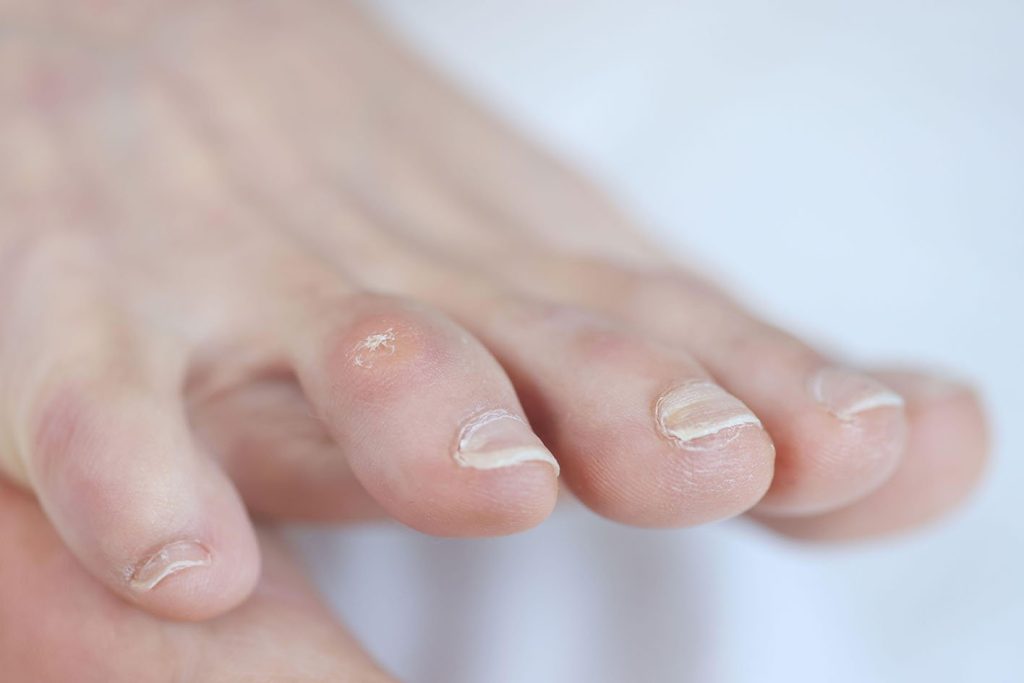
Corns are smaller, concentrated areas of hard skin that form in response to focused pressure or friction. Unlike calluses, they have a dense central core that grows inward, pressing into the sensitive skin beneath, and that’s what causes pain.
They often develop on the tops or sides of toes, or in areas where shoes rub, and are commonly caused by tight footwear or toe deformities. Even small corns can become surprisingly painful and make walking uncomfortable.
Corns don’t usually disappear on their own, so professional podiatry treatment is the safest and quickest way to remove them and stop them coming back.
Common signs of corns:
- Small, circular, raised bumps of hard skin
- Usually found on toes or areas where shoes rub
- Painful when pressed — unlike calluses
- Can feel like “a stone in your shoe” when walking
Typical causes:
- Tight or ill-fitting shoes that create pressure points
- Toe deformities (e.g. hammertoes, bunions)
- Repetitive friction in a specific spot
- Abnormal foot mechanics
Corns don’t usually go away on their own and often become more painful over time. Professional removal is the safest and quickest solution.
Corns vs Calluses – Quick Comparison Table
| Feature | Calluses | Corns |
|---|---|---|
| Size | Larger, wider areas | Small, well-defined circles |
| Location | Soles, heels, balls of feet | Tops and sides of toes, pressure spots |
| Pain | Usually painless (can become sore) | Typically painful when pressed |
| Cause | Repeated pressure or friction | Localised pressure / rubbing |
| Treatment | Foot care, footwear changes, podiatry | Usually requires podiatry removal |
Why Professional Podiatry Treatment Works Best
Many people try to cut away corns or calluses themselves, or use over-the-counter acid plasters, but this can easily make the problem worse, especially if you have diabetes or circulation issues.
At Paul Miller Podiatry in Rochester, we use safe, sterile techniques to remove hard skin and address the root cause:
- 🦶 Gentle, pain-free debridement of hard skin and corns during your appointment.
- 🧭 Gait and footwear assessment to identify pressure points causing the problem.
- 🦻 Expert advice on footwear and insoles to prevent recurrence.
- ✨ Regular routine care to keep your feet comfortable and healthy.
Most patients feel immediate relief after treatment — no downtime needed.
When to See a Podiatrist
It’s time to book an appointment if you notice:
- Persistent or painful corns or calluses
- Difficulty walking comfortably
- Corns or calluses returning frequently
- Any signs of infection (redness, swelling, discharge)
- You have diabetes, circulation problems, or are at higher risk
Early treatment not only eases discomfort but can prevent more serious foot issues down the line.
Professional Podiatrist in Strood, Rochester
While corns and calluses might seem like minor issues, they can quickly become painful and disruptive if left untreated. Understanding the difference between them is the first step — but getting the right care is what really makes the difference.
At Paul Miller Podiatry in Rochester, we provide safe, effective treatment to remove hard skin and address the root cause, so you can walk comfortably again. Whether it’s a stubborn corn, a painful callus, or recurring pressure problems, our experienced team can help.